
CMOs Are Frustrated with AI. That's Actually a Good Sign.
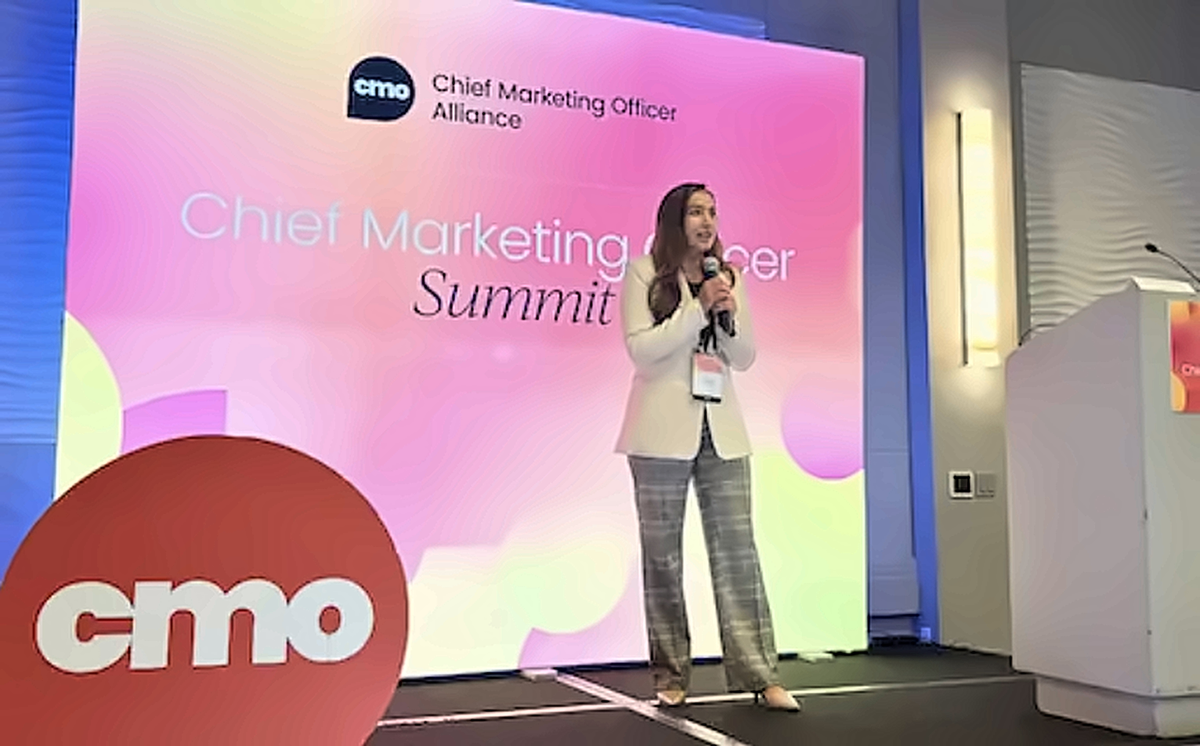
Thoughts from the CMO Alliance Summit | September 8, 2026 | San Francisco
Published: October 16th, 2026.
By Aaron Carpenter, Founder, ACV Consulting
AI Adoption Challenges are becoming a growing concern for marketing leaders as organizations struggle to turn AI investments into consistent results. Drawing on conversations at the September 2026 CMO Alliance Summit in San Francisco, ACV Consulting founder Aaron Carpenter explores the disconnect between AI's promise and its implementation, and why CMO frustration may actually be a sign of progress.
On September 8, 2026, I attended the CMO Alliance Summit in San Francisco, and there was a theme running underneath almost every conversation: frustration.
Not frustration with AI itself. Frustration with the gap between what AI is supposed to do and what is actually happening inside organizations. CMOs who have invested in tools, completed pilots, and championed the technology now find themselves with something uncomfortable: the promise has not fully landed yet, and they’re not sure why.
Here’s my take. That frustration is a signal that leadership is finally engaging honestly with the problem. The hype phase drove early adoption. What we are in now is the implementation gap, where AI adoption challenges are becoming impossible to ignore, and closing it requires a different kind of thinking.
The Three AI Adoption Challenges Slowing Everything Down
Across the conversations I had in San Francisco, three friction points kept coming up:
- Fragmented AI Tools and Workflows: Most marketing team members are using multiple AI tools and trying to build their own workflows. There is no shared stack, no shared process, and often no visibility across the team on what is being built or why.
- Disconnected Data Sources: Data in most organizations is fragmented across departments, systems, and reporting layers. AI pulls from wherever it can find inputs, and those inputs are not always clean, current, or consistent.
- Lack of Ownership and Accountability: Nobody owns the outcome. When AI creates a result, it is often unclear who is responsible for validating it, improving it, or deciding when it is not good enough to use.
What This Looks Like in Practice
One example that came up at the conference clearly illustrates the data problem. A brand asked its team to run the annual planning process twice: once the traditional way, and once using AI, to compare the outputs.
It should have been a clean test. It was not. The CFO was pulling financial data through different tools, some with AI assistance and some without. The marketing team was working from a separate set of projections. The resulting confusion did not just slow things down. It made the planning process harder to complete than it would have been if they had never introduced AI.
The problem was not the technology. The problem was the absence of shared processes and shared data sources. When different parts of the organization draw from different wells, their outputs will conflict.
Why the Frustration Is a Good Sign
Early AI adoption was driven by curiosity and competitive pressure. Nobody wanted to be the brand that was behind. That is a reasonable instinct, but it does not produce durable results.
The frustration I heard in San Francisco comes from a different place. These AI adoption challenges are prompting CMOs to take a closer look at how their organizations operate. The frustration comes from leaders who have done enough to see the potential, and who are now asking the harder questions: How do we standardize this? Who owns the governance? How do we get everyone working from the same foundation?
Those are the right questions. They are also the questions that lead to meaningful, scalable AI integration instead of a collection of individual tools that do not talk to each other.
What Good Integration Actually Looks Like
The brands getting the most from AI are not necessarily the ones with the biggest budgets or the most sophisticated tools. They are the ones with the clearest internal processes.
That means a shared AI stack that the whole team is trained on. It means agreement on which data sources feed into which decisions. It means someone, ideally at a senior level, who owns the outcome and has the authority to enforce consistency.
This is less exciting than deploying the newest model, but it is the infrastructure that makes everything else work. This reflects the importance of human-led AI in brand marketing, where technology supports strategic leadership rather than replacing it.
Closing the AI Implementation Gap
The gap between AI's potential and most brands' current reality is real. So is the path to closing it. The CMOs who figure this out first are not going to be the ones with the best tools. They are the ones who did their organizational work and made a system out of all the AI pieces.
For CMOs looking to close that gap, the first step is straightforward: align the team around shared tools, trusted data, and clear accountability before investing in the next AI solution.
ACV Consulting | Leadership. Innovation. Purpose.


Share:
We Contributed to Brandfuel.ai's “Build for What's Next” Whitepaper — Here's Why